
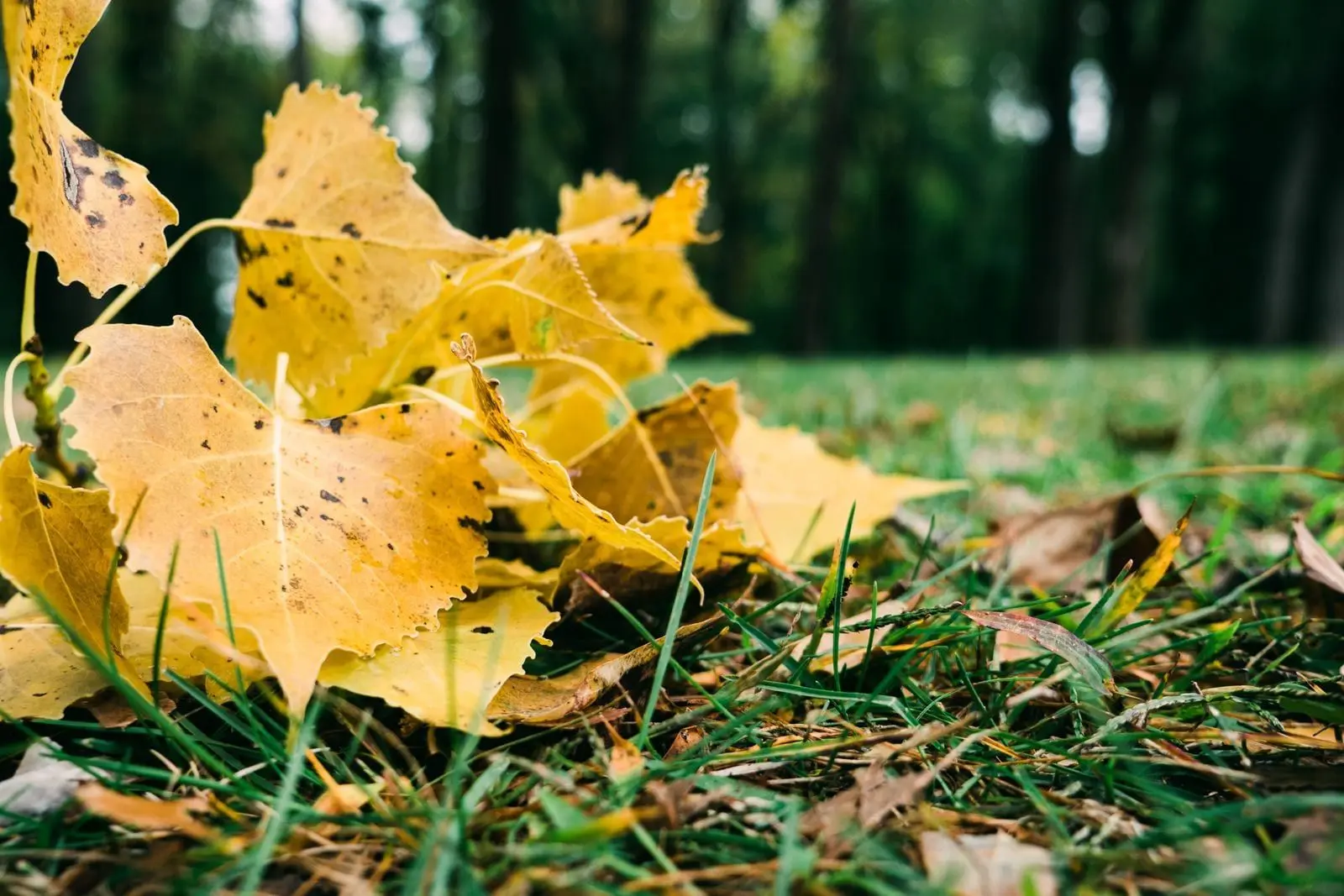
A lawn can shrug off a scattering of leaves. A November’s worth is a different thing.
Walk a Maryville yard in April and last fall is written in the grass: green lawn, then a sharp-edged dead patch exactly the shape of a leaf pile. The homeowner did not do anything wrong in the spring. The damage was done in December, quietly, under the mat.
What the mat does
East Tennessee lawns are mostly tall fescue, a cool-season grass. That detail matters, because fescue does its best growing in the fall. October and November are when it recovers from summer heat, thickens up, and stores energy for the next year. A leaf mat lands on it at exactly the wrong moment.
Under a wet, compressed layer of leaves, three things happen:
- No light. The grass under the mat stops photosynthesizing during its one recovery season, and thins instead of thickening.
- Trapped moisture. Our falls are wet, and a leaf mat holds that water against the crowns of the grass for weeks. Constant wet plus cool temperatures is the recipe for the fungal diseases that show up as dead circles in spring.
- Cover for pests. Voles tunnel and feed under leaf cover all winter. You find the runway trails in March, carved through what used to be turf.
None of this is visible in December. The mat looks like a lawn taking a nap. It is closer to a lawn being smothered.
The spring bill
Thin, patchy turf does not fix itself in East Tennessee, because fescue does not spread to fill gaps the way warm-season grasses do. Repair means aeration and overseeding, and dead areas mean seed or sod work on top of that. That repair typically costs more than the leaf cleanup that would have prevented it, and it costs a season of ugly lawn besides. Weeds are opportunists, and every bare patch the mat leaves behind is an opening.
The leaf mat does its damage during the one season a fescue lawn is supposed to be getting stronger. You pay for that in April.
When doing nothing is actually fine
Honesty matters here: not every yard needs a leaf service.
If you have one modest tree and a light scattering, run the mower over the leaves with a mulching blade while the layer is thin and dry. Shredded leaves sift into the turf, feed the soil, and cause no harm. That is free and it works. And if you would rather not deal with it, we will take the job.
The mulch-in-place approach fails when the volume beats the mower: a wooded lot, a stand of mature oaks and maples, or any yard where the leaves land faster than you can shred them. Oak leaves in particular break down slowly and mat hard. If you cannot see grass between passes, you are past mulching and into removal.
Why we do two visits
Blount County leaves do not drop at once. The maples let go in early November and the red oaks hang on toward December. One cleanup in the middle misses both ends, which is why our standard package is two visits, the first in November and the second in December. The lawn spends the fall breathing instead of buried.
What the two-visit package costs and why we price it flat: What leaf removal costs in East Tennessee. If your city collects leaves, the rules are here: Leaf pickup rules in Blount County.
Tagged