
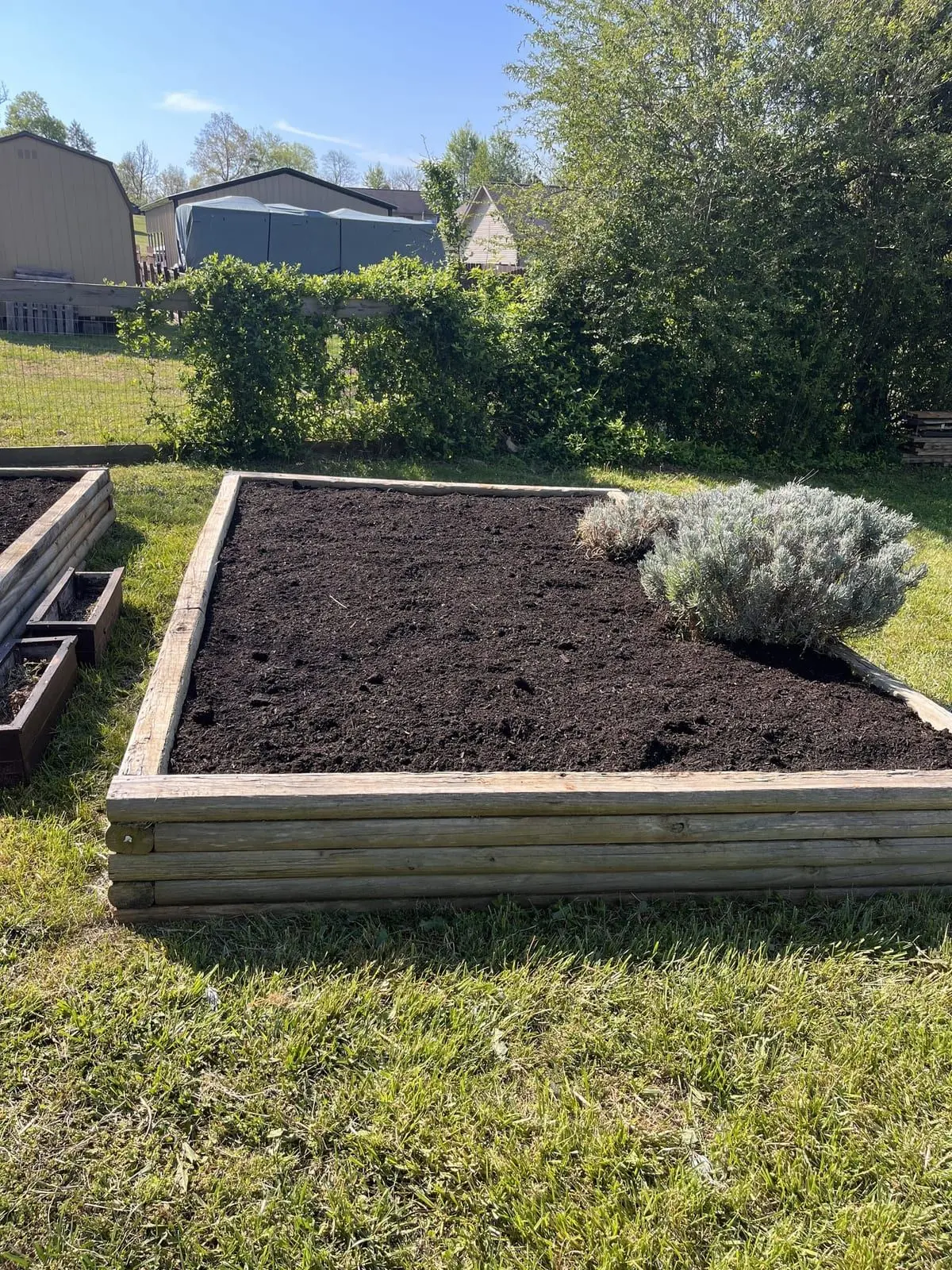
Fresh mulch is one of the fastest ways to improve the appearance of a property.
A landscape can go from tired and neglected to clean and professionally maintained in a single day. The problem is that mulch doesn’t stay fresh forever.
One of the most common questions we hear from homeowners throughout Blount County is, “How often do I actually need to replace my mulch?” Some people believe mulch should be replaced every year without exception. Others wait until it has almost completely disappeared before adding more.
The truth falls somewhere in the middle.
We’ve maintained and renovated landscape beds throughout East Tennessee for years, and one thing we’ve learned is that mulch serves a purpose far beyond appearance. While the visual benefits are obvious, mulch also plays a major role in moisture retention, weed suppression, soil protection, and plant health.
The biggest misconception is that mulch replacement is purely cosmetic. In reality, old mulch eventually stops doing many of the jobs it was installed to perform.
Most mulch needs attention every year
For most East Tennessee properties, landscape mulch should be evaluated annually.
That doesn’t necessarily mean complete replacement every year, but it does mean inspecting depth, condition, and overall appearance.
Organic mulches naturally decompose over time.
Rain, sunlight, temperature changes, and microbial activity all contribute to the breakdown process. That’s actually one of the reasons mulch benefits soil health, but it also means the material gradually disappears.
In many landscapes, a yearly refresh helps maintain:
- Consistent appearance
- Proper coverage depth
- Moisture retention
- Weed suppression
- Bed definition
Properties with heavy sun exposure or steep slopes often experience faster breakdown than heavily shaded areas.
Color fade is usually the first sign
Many homeowners notice mulch needs attention long before its functional benefits disappear.
The first sign is usually color loss.
Fresh hardwood mulch often has rich, dark tones that provide strong contrast against plants and lawns. Over time, exposure to sun and weather causes those colors to fade.
While faded mulch doesn’t necessarily mean it’s no longer functional, it often signals that the material is aging.
Other visual indicators include:
- Gray or washed-out appearance
- Uneven coverage
- Thin spots
- Soil becoming visible
- Mulch that appears compacted or matted
If the beds no longer provide the clean appearance they once did, a refresh may be warranted even if some functional value remains.
Mulch depth matters more than most people think
The effectiveness of mulch depends heavily on depth.
Too little mulch provides limited weed suppression and moisture retention.
Too much mulch can create problems as well.
For most landscape beds, a finished depth of roughly 2–4 inches provides the best balance between performance and plant health.
Over time, that depth naturally decreases as material decomposes.
When mulch becomes too thin:
- More weeds emerge
- Soil dries out faster
- Erosion increases
- Plant roots become exposed
- Beds lose visual impact
Many homeowners are surprised to discover their original 3-inch mulch layer has compressed to less than an inch after several seasons.
Different areas age at different rates
Not all landscape beds break down equally.
Several factors influence how quickly mulch deteriorates:
- Sun exposure
- Slope
- Drainage
- Wind
- Tree canopy coverage
- Irrigation patterns
For example, mulch installed on a steep slope may wash or migrate faster than mulch installed in a sheltered foundation bed.
Similarly, areas receiving heavy irrigation often experience faster decomposition than dry locations.
This is one reason blanket recommendations don’t always work.
One portion of a property may require annual refreshing while another area remains in excellent condition for much longer.
Mulch is often the cheapest landscape upgrade
Many landscape improvements require significant investment.
Mulch isn’t usually one of them.
Compared to replacing shrubs, redesigning beds, installing hardscapes, or renovating entire landscapes, refreshing mulch is relatively affordable while delivering a noticeable visual impact.
A fresh mulch installation can:
- Improve curb appeal
- Highlight plantings
- Create visual contrast
- Improve bed definition
- Make the property appear better maintained
This is one reason fresh mulch is often recommended before listing a home for sale or preparing for special events.
The return on investment is frequently substantial compared to the cost.
When to call us
Many homeowners know their mulch needs attention but aren’t sure whether they need a simple refresh or a more comprehensive landscape renovation.
That’s where a professional evaluation can help.
At Lawngevity, we regularly help homeowners determine whether their beds need:
- Mulch replenishment
- Bed redefinition and edging
- Weed removal
- Shrub pruning
- Plant replacement
- River rock conversion
- Landscape bed renovation
- Drainage improvements
In many cases, mulch replacement becomes the starting point for a larger improvement plan that dramatically enhances the appearance of the entire property.
We provide mulch installation, landscape bed renovations, river rock installation, drainage improvements, planting services, and complete landscape refreshes — including mulch installs in Alcoa — throughout Blount County and surrounding East Tennessee communities.
The goal isn’t simply adding more mulch. The goal is creating landscape beds that look clean, healthy, and professionally maintained throughout the year.
The bottom line
Mulch does far more than improve appearance. It protects plants, improves soil conditions, suppresses weeds, and helps landscapes perform at their best. If your beds are looking tired, faded, or thin, a fresh mulch installation may be one of the simplest and most effective improvements you can make.
Tagged