
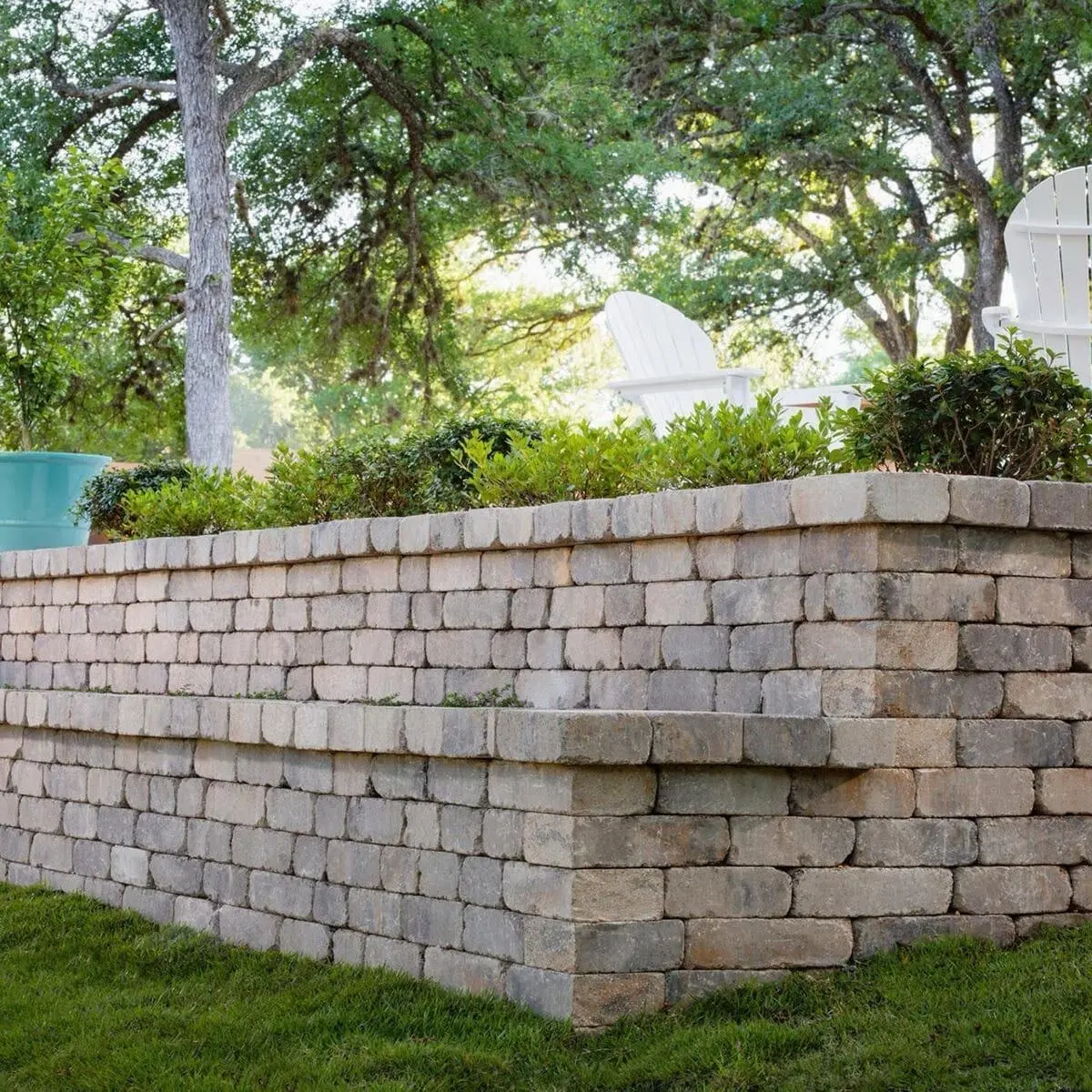
Retaining walls rarely fail all at once.
Most homeowners assume they’ll wake up one morning and find a wall laying in the yard. In reality, retaining walls usually spend months—or even years—showing warning signs before a major failure occurs. The problem is that many of those warning signs are subtle enough that they’re easy to ignore until the repair bill becomes much larger than it needed to be.
We build and repair retaining walls throughout Blount County and the surrounding East Tennessee area. One thing that consistently surprises homeowners is that the wall itself is rarely the real problem. Most retaining wall failures start behind the wall, where drainage issues, poor installation practices, or years of pressure slowly begin pushing the structure beyond its limits.
The biggest misconception we see is that a retaining wall is simply holding dirt back. In reality, it’s holding back dirt, water, and thousands of pounds of pressure.
A small lean today becomes a big problem tomorrow
The most common early warning sign is a wall that begins leaning forward.
A perfectly installed retaining wall may have a slight intentional batter, meaning it leans slightly back into the hillside. What you don’t want to see is a wall that appears to be tipping outward toward your yard, driveway, patio, or home.
Many homeowners notice this change gradually and assume it’s normal settling. Most of the time, it isn’t.
As soil becomes saturated behind the wall, hydrostatic pressure builds. If the wall lacks proper drainage or wasn’t constructed with adequate backfill, that pressure begins pushing the structure forward. Once movement starts, it rarely corrects itself.
A simple way to check is to stand at one end of the wall and look straight down its face. If you can visibly see sections bowing or leaning outward, it’s worth investigating further.
The takeaway: retaining walls almost never move backward on their own. Any noticeable lean deserves attention before it becomes a structural issue.
Cracks, gaps, and separation
Cracks tell a story.
For block walls, look for gaps opening between courses or sections that no longer line up properly. For timber walls, pay attention to splitting, rot, and fasteners pulling loose. Concrete walls may develop vertical cracks or separation joints that widen over time.
Not every crack means imminent failure. Materials expand and contract naturally with temperature changes. What matters is whether those cracks are growing.
One of the easiest ways to monitor this is by taking a photo every month from the same location. Many homeowners are surprised to discover movement that wasn’t obvious day-to-day.
Pay particular attention to:
- Gaps between blocks
- Separation between wall sections
- Cracked capstones
- Split timbers
- Expanding concrete cracks
The takeaway: new or widening cracks usually indicate movement somewhere in the system, and movement is something retaining walls aren’t designed to tolerate indefinitely.
Water coming through the wall
A retaining wall should manage water.
It should not be trapping it.
After a heavy rain, it is normal to see some moisture around a wall. What isn’t normal is water actively pouring through joints, washing soil out, or creating muddy discharge points.
Many retaining wall failures in East Tennessee begin because water has nowhere to go.
Clay-heavy soils common throughout Blount County hold moisture well. Without proper drainage stone, geotextile fabric, drain pipe, and outlets, water accumulates behind the wall and dramatically increases pressure.
Signs of drainage problems include:
- Standing water near the wall
- Muddy seepage
- Soil washing through joints
- Persistent wet areas after rain
- Erosion near the base
The takeaway: when water starts finding its own path, it’s usually because the wall’s drainage system isn’t doing its job.
Sections that are bowing or bulging
A lean often affects an entire wall.
A bulge usually affects a specific section.
This is one of the more serious warning signs because it indicates concentrated pressure in a particular area. You’ll often see a section that protrudes several inches farther than the surrounding wall.
This commonly occurs when:
- Drainage is failing behind one section
- Tree roots are creating pressure
- Backfill was improperly compacted
- The wall wasn’t engineered for the load it carries
A bulge is essentially the wall telling you where it’s losing the battle.
The takeaway: localized bowing often progresses faster than general leaning and should be addressed quickly.
The top of the wall is no longer level
Retaining walls should look intentional.
When capstones begin stepping unevenly or the top of the wall develops visible waves, settlement is often occurring beneath the structure.
This can indicate:
- Base failure
- Erosion beneath the wall
- Improper foundation preparation
- Soil movement
Many homeowners focus on the face of the wall and miss what’s happening at the top. In reality, elevation changes are often one of the clearest indicators that the wall is shifting.
The takeaway: a wall that is settling unevenly today may be structurally compromised tomorrow.
Soil is disappearing behind the wall
Take a walk behind your retaining wall.
If you notice depressions forming, mulch sinking, voids appearing, or landscape beds settling unexpectedly, soil may be washing out behind the structure.
This often accompanies drainage failures.
As water moves through the system, it can carry fine particles with it. Over time, voids develop behind the wall, weakening support and creating conditions for more dramatic movement.
Many homeowners don’t discover this problem until a section suddenly shifts after a major rain event.
The takeaway: disappearing soil usually means the wall is losing support where you can’t see it.
The wall is affecting other structures
This is often the point where homeowners finally call.
The retaining wall itself may not look catastrophic, but nearby structures begin showing symptoms.
Examples include:
- Fence posts leaning
- Patio pavers separating
- Sidewalks lifting
- Driveways cracking
- Pool decks shifting
- Drainage patterns changing
Once movement begins affecting other structures, repair costs can increase significantly because you’re no longer dealing with only the wall.
The takeaway: retaining wall problems rarely stay confined to the wall itself.
Why most retaining walls actually fail
Most retaining walls don’t fail because they get old.
They fail because they can’t handle water.
We’ve seen walls built with excellent materials fail prematurely because drainage was overlooked. We’ve also seen older walls remain stable for decades because water management was done correctly from day one.
A properly built retaining wall is more than blocks or timbers. It’s a system that includes:
- Proper excavation
- Compacted base material
- Drainage stone
- Geotextile fabric
- Drain pipe
- Safe discharge locations
- Appropriate wall design
The visible wall is only part of what makes the structure work.
When to call us
Retaining wall issues aren’t always emergencies.
If you’ve noticed a minor crack or slight movement, you may simply need monitoring and a professional assessment. Many homeowners can safely track changes for a period of time before major work becomes necessary.
Where we recommend calling a professional:
- Any wall that is visibly leaning or bowing
- Walls over 3–4 feet tall showing movement
- Water actively washing through the structure
- Soil loss behind the wall
- Cracking that continues to worsen
- Walls near homes, pools, driveways, or other structures are affected
- Any retaining wall that has moved after a major rain event
At Lawngevity, we design and install retaining walls and landscaping, drainage systems and French drains, grading corrections, and erosion-control solutions — including retaining wall work in Maryville — throughout Blount County and surrounding East Tennessee communities. Many retaining wall problems can be repaired if they’re caught early enough. Waiting usually makes the repair larger, more expensive, and more disruptive.
The bottom line
Retaining walls rarely fail without warning. The challenge is knowing which warning signs matter and acting before a small problem becomes a major reconstruction project. If your wall is showing any of these symptoms, the best time to investigate is now—not after gravity makes the decision for you.
Tagged